
Asia Emerging Economic Sectors The Real Story Behind Growth
When you visit cities such as Kuala Lumpur, Singapore and Bangkok these days, you will observe a major difference from just tall new buildings. The way we live our lives has completely changed as well. Do you remember when the only thing people cared about was “opening a shop”? Today, you can observe your aunty from the neighborhood accepting payments via QR codes. Your cousin likely works for some kind of startup that helps factories use less electricity. These are changing very quickly right now, and when discussing Asia emerging economic sectors people often make it sound as though it is a very complicated math’s problem.
However, the reality is that it is simply a question of whether Asia is now creating products. Which suit our way of living as opposed to copying what has already been created in the west. There is a major shift in the areas where the “real” jobs and money will be. Let’s examine the demonstrated changes happening on the ground.
Sector Growth Navigator
It’s Not Just “Eco-Friendly,” It’s a Massive Business

A few years back, people thought of a “Green Economy” as being about using paper straws or having recycling bins. However, now that definition has expanded into many more serious sectors which include the billions of dollars invested into making sure our factories and homes consume energy efficiently.
For example, look at countries like Vietnam or Malaysia, where large-scale solar farms are sprouting up everywhere. Why? Because solar energy has become so inexpensive over the last few years that there are now many places were producing energy from solar. Costs would less than producing energy from coal. Governments and companies worldwide have looked at how using renewable energy will benefit their bottom-line in ways that have not been done before. There is also much more to the renewable energy growth in Asia than just solar. There is also very much a lot of focus on “circular” economies. Companies previously disposed of waste material. However, companies have finally realized that waste is just another form of money that they haven’t figured out how to use yet!
Asia Emerging Economic Sectors The Shift to Digital Services and Enterprise Solutions
The size of e-commerce is apparent to everyone as you likely purchased something using your smartphone just yesterday. However, most of the expansion currently taking place in Asia with digital services will take place in the next five years. What is really creating noise are the “boring” back-end types of software applications that are being utilized. An example would be software that allows a small cafe in Asia to track and manage its inventory or an automated AI tool. That allows a bank to determine whether or not a particular transaction was fraudulent.
Historically, Asian businesses only utilized Western software applications. This has changed dramatically over the last couple of years as many industries in Asia develop their own “local solutions”. That are more relevant to Asia’s business culture and “slang”. For example, a financial technology application (fintech) in Jakarta that provides options for borrowers that do not have credit cards can better support that demographic than a large financial institution in Silicon Valley could. This is where the Asia’s developing markets are in the forefront of making this economy successful. They are avoiding the “laptop faze” and have gone straight to “mobile-everything.” Everything is seamless and fast, resulting in creating an additional layer of jobs that did not previously exist five years ago.
Healthcare is Getting a Major Tech Upgrade

Asia is aging. That’s simple enough. In addition to creating additional hospitals to treat the elderly population. Asia’s focus on healthcare and biotech is proving that advancements made in this region differ from those that have come about as a result of Western innovations. For instance, have you ever noticed how many smartwatches people are now wearing? Smartwatches are more than just a step-counter; they represent the beginning of “preventative health care”.
Another area of growth and development is that in the next 5 (five) years there are going to be a lot of biotech/startups in areas. Such as India and Singapore that will develop medications based on the Asian DNA. That were previously excluded from the majority of medical studies due to the historically western populations. They used to perform these studies and develop ALL future healthcare in the U.S. This ties into the previous comment about smartwatches due to the fact that they will provide meaningful data regarding health. They would based on how a person eats, lives, and their genetic background. Telehealth is now considered “normal”. My uncle hated going to the doctor because of traffic. He has a video call for his regular appointment which eliminates any type of waiting of 4 hours for a patient to be seen by a physician.
The Logistics Backbone: Moving Things Smarter
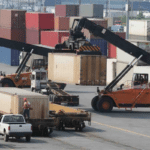
Whenever you observe a delivery rider on any street, you are viewing one small segment of the vast logistics and supply chain infrastructure that keeps Asia connected to its global counterparts. In fact, the majority of what transpires in warehouses is where most of the “magic” occurs. By 2026, many warehouses operate on complete autopilot, with robots performing any labor-intensive tasks and artificial intelligence determining the best time to ship specific deliveries to various cities, even before customers click “buy.”
The logistics and supply chain sectors are currently among the largest emerging economic sectors throughout Asia as a result of our geography. Delivering parcels from Kuala Lumpur to a remote village in east Malaysia or to an island in the Philippines is often problematic. As logistics companies develop more advanced data, they are finding ways to lower costs and increase speed for delivery of parcels.
This industry has progressed beyond simply utilizing trucks and ships for shipping. Now, companies rely on detailed data to provide customers with timely shipping options, and that data allows them to ship as quickly as possible to customers across Asia. The logistics and supply chain industries are the driving forces behind the continued growth of e-commerce throughout Asia. Without the support of logistics and supply chain industries, we would not see the volume of online sales we currently experience.
Living in the Future: Smart Cities Development

We will now discuss “smart homes”, which make up the backbone of most smart cities in Asia. To put this in perspective, Smart Cities don’t mean flying cars, it means things that matter. Such as traffic lights that respond according to real time traffic, or garbage disposal systems that alert a truck when bins are full. Cities such as Shenzhen, Tokyo, and parts of Kuala Lumpur are developing into “living labs’. By using sensors to monitor everything from the quality of air to water leaks in buildings. This is a huge opportunity for the emerging economies of Asia due to the massive demand for hardware, software, and technical planning and management skills.
The intent is not to create a city that is reminiscent of a sci-fi movie but rather provide residents with a better quality of life (less stressful). Examples of this are the arrival of the bus on time due to the optimized route for that specific bus or receiving a lower electricity bill due to buildings “knowing” when to dim lights, demonstrating success of smart cities. Ultimately, “Efficiency” is the key to growing the economy in 2026. Therefore, developments in the above industries will drive economic growth.