
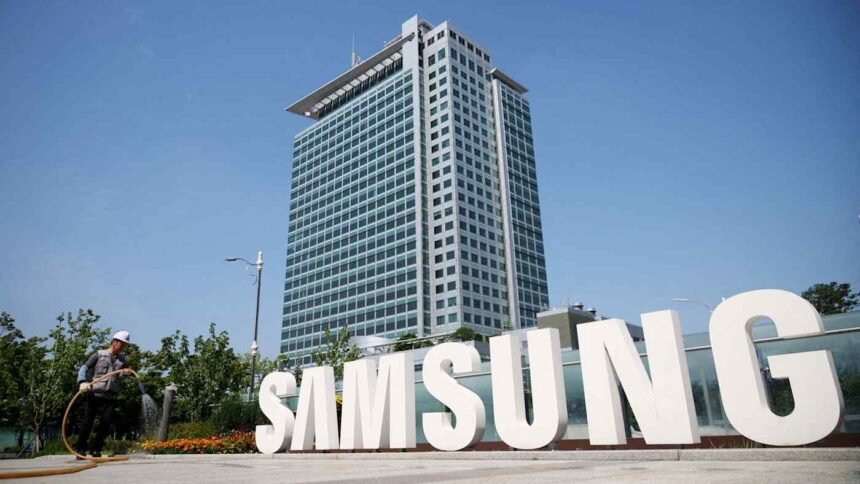
The Nikkei Research survey of major Asian markets ranks global consumer brands by perceived brand value across multiple countries in the region. According to the poll — reported by Nikkei Asia on 16 October 2026 — Samsung topped the overall ranking for a third consecutive year, with Apple leading in Vietnam and Taiwan, and Toyota and Honda remaining inside the top ten overall. The selection basis is consumer perception across major Asian markets, not revenue, market capitalisation or analyst scoring.
The Sector: Consumer Brand Perception Across Asia
Brand perception surveys in Asia carry weight because consumer preferences vary sharply by country, income level and product category. Electronics brands compete against automotive names and global tech platforms for top-of-mind recognition, and no single market’s result can be read as a pan-Asian verdict. Nikkei Research’s annual poll attempts to aggregate that picture across major markets, making it one of the more widely cited third-party references for brand standing in the region.
The 2026 poll covered multiple major Asian markets. Specific countries surveyed, sample sizes, fieldwork dates and weighting methodology are not stated in the supplied source, which was behind a paywall at the time of retrieval (30 October 2026). The facts below are drawn from the headline, subheadline and introductory paragraph visible before the paywall, supplemented by no other verified source.
The Top Companies: Samsung, Apple, Toyota and Honda
Four brands are named in the supplied evidence. Their positions in the Nikkei Research poll, as reported by Nikkei Asia (16 October 2026), are as follows:
| Brand | Home Market | Sector | Poll Position (Overall) | Market-Specific Note |
|---|---|---|---|---|
| Samsung | South Korea | Electronics | No. 1 overall — third consecutive year | Strong support in Thailand, Malaysia and elsewhere in Southeast Asia |
| Apple | United States | Consumer technology | Inside top results; overall rank not stated in supplied sources | No. 1 in Vietnam and Taiwan |
| Toyota | Japan | Automotive | Top 10 overall | Market-specific breakdown not stated in supplied sources |
| Honda | Japan | Automotive | Top 10 overall | Market-specific breakdown not stated in supplied sources |
Ranks 5 through 10 and all other named brands are not stated in the supplied sources. This article lists only the four brands for which supplied evidence exists; no additional entries have been added to reach a round number.
Company Profiles
Samsung — Three-Year Overall Leader
Headquarters: Seoul, South Korea. Sector: Consumer electronics, semiconductors, home appliances. Reason for inclusion: Ranked No. 1 across major Asian markets in the Nikkei Research poll for a third consecutive year, as reported by Nikkei Asia on 16 October 2026. Geographic strength in this poll: The supplied source specifically notes strong consumer support in Thailand, Malaysia and elsewhere in Southeast Asia. Revenue, market capitalisation and other financial figures: Not stated in the supplied sources for this poll. Selection criterion met: Highest overall brand perception score across surveyed Asian markets.
Three consecutive years at the top of a multi-market consumer poll points to consistent brand equity rather than a single-year spike, though the reasons behind that consistency — product range, price positioning, after-sales network or advertising spend — are not analysed in the supplied source excerpt.
Apple — Market Leader in Vietnam and Taiwan
Headquarters: Cupertino, United States. Sector: Consumer technology (smartphones, computers, wearables). Reason for inclusion: Ranked No. 1 in Vietnam and Taiwan in the same Nikkei Research poll, per Nikkei Asia (16 October 2026). Overall rank across all surveyed markets: Not stated in the supplied sources beyond the subheadline reference. Revenue, market capitalisation and other financial figures: Not stated in the supplied sources for this poll. Selection criterion met: Highest brand perception score in at least two individual Asian markets covered by the survey.
Apple’s first-place finish in Vietnam and Taiwan — while Samsung led the aggregated ranking — illustrates how pan-Asian brand surveys can mask material country-level divergence. The supplied source does not explain why Apple performed differently in those two markets compared with the Southeast Asian markets where Samsung drew its strongest numbers.
Toyota — Top-10 Overall Finisher
Headquarters: Toyota City, Japan. Sector: Automotive. Reason for inclusion: Remained inside the top 10 in the overall Nikkei Research poll ranking, per Nikkei Asia (16 October 2026). Exact overall rank: Not stated in the supplied sources. Market-specific performance: Not stated in the supplied sources. Revenue, market capitalisation and other financial figures: Not stated in the supplied sources for this poll. Selection criterion met: Top-10 overall brand perception score across surveyed Asian markets.
Toyota’s continued presence in the top 10 alongside electronics brands underlines the breadth of automotive brand equity in Asia, where Japanese passenger-car and commercial-vehicle nameplates have long held strong consumer recognition across Southeast Asia and beyond.
Honda — Top-10 Overall Finisher
Headquarters: Tokyo, Japan. Sector: Automotive and motorcycles. Reason for inclusion: Remained inside the top 10 in the overall Nikkei Research poll ranking, per Nikkei Asia (16 October 2026). Exact overall rank: Not stated in the supplied sources. Market-specific performance: Not stated in the supplied sources. Revenue, market capitalisation and other financial figures: Not stated in the supplied sources for this poll. Selection criterion met: Top-10 overall brand perception score across surveyed Asian markets.
Honda’s two-wheel presence across Southeast and South Asia — where motorcycles are primary rather than secondary transport — gives the brand touchpoints with consumers at multiple income levels, a structural advantage that few purely passenger-car brands can replicate.
Why This Ranking Matters for Asia Watchers
The Nikkei Research poll’s value lies in its multi-market scope: an aggregated pan-Asian result and individual country results can tell different stories, as the Samsung-versus-Apple split between overall and Vietnam/Taiwan rankings demonstrates. For brand strategists and investors, the gap between an aggregated top position and a country-level result is often where the actionable intelligence sits.
The three-year consistency of Samsung’s overall lead is notable because it spans a period of significant market disruption — accelerating AI integration in devices, supply-chain restructuring after pandemic-era shortages, and intensifying competition from Chinese electronics brands in Southeast Asian price tiers. That Samsung held the top perception position through those years, as measured by Nikkei Research, suggests a brand relationship with Asian consumers that has not eroded despite competitive pressure.
The continued presence of Toyota and Honda in the top 10 — alongside consumer electronics giants — reflects a broader truth about Asian brand hierarchies: automotive nameplates built over decades of localised assembly, dealer networks and motorsport sponsorship remain deeply embedded in consumer consciousness, even as digital-era brands compete for attention.
Three evidence gaps limit how far this analysis can go. First, the full ranking — positions 2 through 10 and beyond — is behind a paywall and not available in the supplied source excerpt. Second, the methodology (sample size, country weighting, question phrasing) is not stated in the supplied sources, making it impossible to assess how robust the aggregated result is versus any individual market’s score. Third, trend data — whether any brand’s score moved up or down year on year — is not stated in the supplied sources for this poll cycle.
Readers seeking to act on this ranking — whether for investment research, market-entry planning or competitive benchmarking — should consult the full Nikkei Research report directly, where methodology, full rankings and year-on-year trend data are expected to be available to subscribers.
Source: Nikkei Asia, reported 16 October 2026, based on Nikkei Research poll data. The full article was behind a paywall at retrieval on 30 October 2026; only the headline, subheadline and introductory paragraph were accessible. All facts above are drawn solely from that publicly visible excerpt.