


Where to Look When We’re Talking About the Fastest Growing Markets in Asia Right Now
You know how when you’re catching up with friends, the conversation eventually turns to, “So… business how? Got any new projects?” Lately, that chat has been revolving around where things are actually moving. Not just sideway or surviving, but really growing. And if you look past the headline noise—the geopolitical stuff, the tariff talks—the reality is that the fastest growing markets in Asia are telling a pretty clear story. But it’s not just one story. It’s a few different vibes happening at once.
- Stop 1: India – The “Everything, Everywhere, All At Once” Economy
- Stop 2: Vietnam – The Resilient Workshop
- Stop 3: Indonesia – The Downstream King
- Stop 4: Malaysia – The Quiet Achiever in Semis and Services
- Stop 5: The Tech Corridor (Korea, Japan, Taiwan) – The Hardware Heroes
- So… Where Does That Leave Us?
We’re not talking about boring GDP percentages here. Let’s break it down like we’re looking at a five-stall pasar malam. Each one has a different smell, a different crowd, a different feel. But all of them are busy.
Asia Market Navigator
India
The clear frontrunner. Fitch says 6.4% GDP growth in 2026. It’s not just hype.
view section →Vietnam
The factory floor of choice. ~7% growth & the go-to for supply chain shifts.
view section →Indonesia
The sleeping giant is awake. Stable 5%+ growth, but the real story is downstreaming.
view section →Malaysia
Knocking on 5% growth again. The dark horse in data centres & semiconductors.
view section →The Tech Corridor
Korea, Japan & Taiwan. The AI boom’s hardware heroes are printing money.
view section →Stop 1: India – The “Everything, Everywhere, All At Once” Economy

If you had to put money on sheer momentum, India is just hard to ignore. Fitch Ratings just put out their latest, and they’re confirming what everyone kinda feels: India is set to remain the fastest growing economies in Asia 2026 titleholder, with a projected growth of 6.4% .
But what does that actually mean for us normal people? It’s not just about the number. It’s the texture of it. You’ve got this massive, nearly $4 trillion economy, but it’s being propelled by two things you can actually see.
First, the digital sprawl. We’re talking over 900 million internet users. That’s not just people scrolling Instagram; that’s a massive market for Asia fintech growth. From payments to lending, the sheer scale of adoption is something we don’t really see anywhere else . Second, they’re producing a huge chunk of the world’s STEM graduates. So for anyone looking at Asia tech boom opportunities, India is where the talent pool is ridiculously deep . It’s noisy, it’s chaotic, but man, it is moving.
Stop 2: Vietnam – The Resilient Workshop

Hopping over to Vietnam, the story here is different. It’s less about massive internal scale and more about being in the right place at the right time—and executing perfectly.
For the last few years, whenever people talked about supply chains moving, Vietnam was the name on everyone’s lips. But it’s not just a Plan B anymore. It’s become a core part of the global manufacturing line-up. We’re seeing GDP consistently humming along at around 7%, and the government there is genuinely business-friendly .
What’s interesting for 2026 is the depth. It’s not just cheap assembly anymore. The growth is spreading into Asia manufacturing expansion in advanced sectors. You’ve got a young population of over 100 million, and they’re not just workers—they’re becoming consumers . So whether it’s property, retail, or professional services feeding the factory boom, Vietnam feels like a market that has moved from “emerging” to “established” without anyone really announcing it.
Stop 3: Indonesia – The Downstream King

Then you look at Indonesia. We always knew it was a sleeping giant—huge population, massive resources. But the game plan now is smart.
They’re not just digging stuff up and shipping it out anymore. The big push is “downstreaming.” So instead of just exporting raw nickel, they’re saying, “You want our nickel? Fine. But build the smelter here. Process it here. Create the jobs here.” This strategy is forcing a whole new layer of industrial development.
And it’s working. The economy is stable, growing at over 5%, and foreign investment is pouring in, not just for extraction, but for building things . It also makes them one of the more resilient spots if global trade gets rocky, because their economy is a bit more closed—they’re building for themselves and for the region . You can see it in the rise of digital payments and local champions in Asia fintech growth and banking .
Stop 4: Malaysia – The Quiet Achiever in Semis and Services
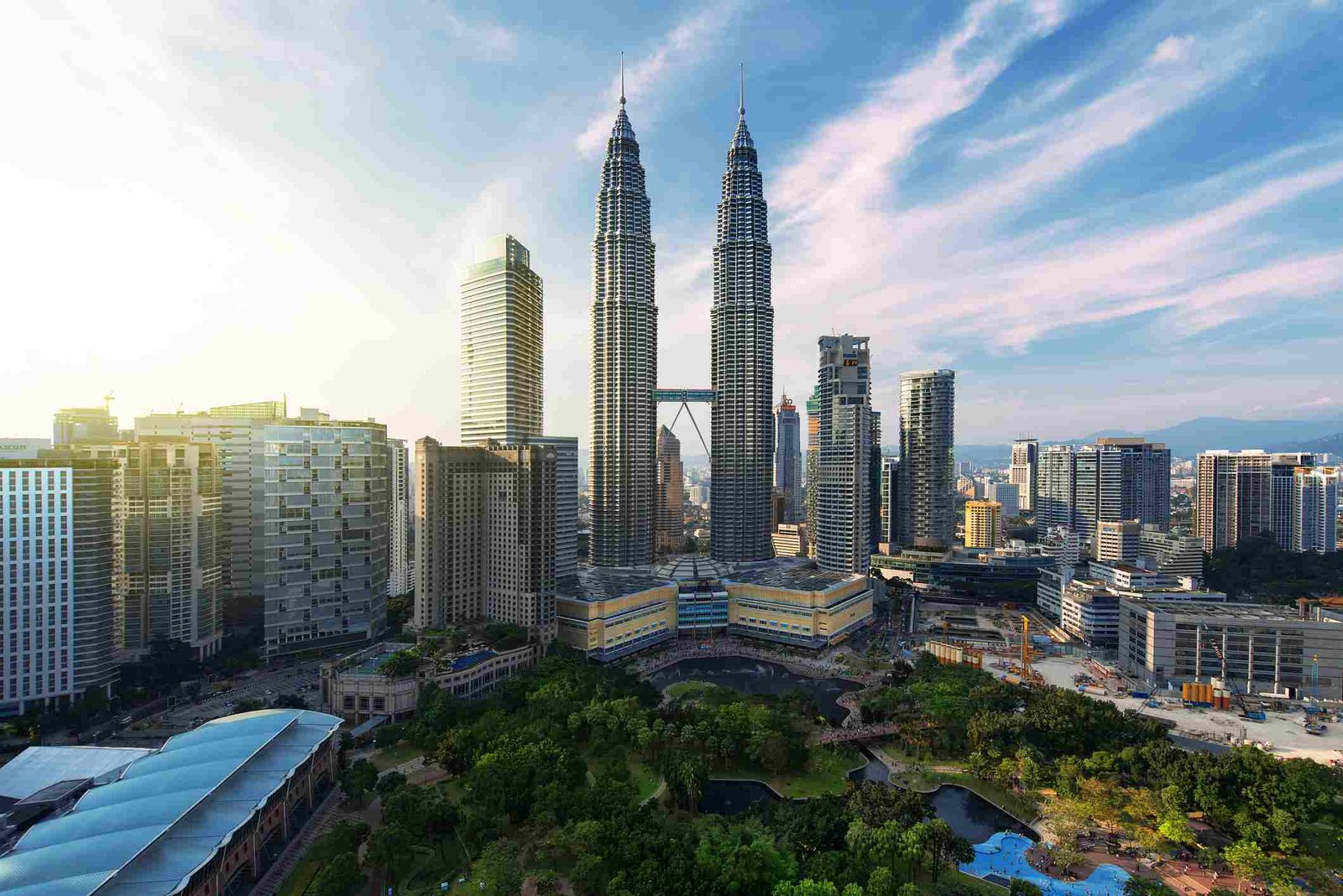
Okay, home ground. Let’s be honest, we Malaysians sometimes a bit slow to celebrate ourselves. But looking at the data, we’re actually in a good spot. The Asian Development Bank recently bumped up our forecast, expecting growth to hit around 4.9% for 2025, and that momentum carries into 2026 .
But where’s it coming from? It’s not just one thing, which is actually our strength. We’re seeing a massive resurgence in the electronics ecosystem, largely thanks to the global AI wave. Everyone needs chips, and we’re a key part of that backend supply chain. Then there’s the digital economy push. The government is targeting digital economy to make up over 25% of GDP by 2030. You see it in the influx of data centres and the push for digital payments . And let’s not forget, tourism is back with a vengeance, giving service insudtry a real boost. It’s a broad-based recovery.
Stop 5: The Tech Corridor (Korea, Japan, Taiwan) – The Hardware Heroes

Finally, you have the established powerhouses, but with a new twist. This year, the story in North Asia is less about explosive GDP and more about a profit explosion, specifically tied to the Asia tech boom.
If you follow the money, global investors are rotating out of some pricey US tech stocks and looking at Asia for value . Why? Because the AI boom isn’t just about software like ChatGPT. It’s about the hardware. It’s about the super-advanced chips made by TSMC in Taiwan. It’s about the high-bandwidth memory made by Samsung and SK Hynix in Korea. It’s about the precision equipment from Japan.
Look at the numbers: Samsung’s operating profit more than tripled recently . Korean and Taiwanese tech firms are seeing forecasted earnings growth that beats the Nasdaq . Plus, there’s a whole “value-up” reform thing happening in Korea and Japan, pushing companies to be more shareholder-friendly . So while they are mature economies, within them, there are high growth markets Asia investors are watching very closely—the semiconductor and AI infrastructure sectors.
So… Where Does That Leave Us?
Look, there’s no single “best” place. It’s about what fits. If you want scale and digital frenzy, you look at India. If you want manufacturing precision and stability, it’s Vietnam or Malaysia. If you want to ride the AI hardware wave, you look at the northern corridor.
The bigger takeaway? The Asia economic outlook 2026 is surprisingly solid. Despite all the noise about tariffs and trade wars, the underlying engine—driven by tech investment, domestic consumption, and smart industrial policy—is still humming . It feels less like a speculative bubble and more like a structural shift.
So next time someone asks you where the action is, you can tell them it’s not in one place. It’s in the factories of Vietnam, the data centres in Johor, the chip fabs in Taiwan, and the fintech apps in Mumbai. Asia is just… busy building its own future.