

Why Green Business Strategies are the Secret Weapon for Malaysian SMEs in 2026
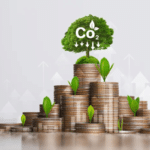
If you walk into any corporate office in KL or a manufacturing plant in Batu Kawan today, the conversation has shifted. It is no longer just about “cost, insurance, and freight.” Now, everyone is asking about your “carbon score.” People used to think that Green business strategies were just a fancy way to plant trees and get a tax deduction. But in 2026, it has become the “standard operating language” for anyone who wants to sell to bigger players.
The reality is that the market is going through a “paradigm shift.” It is like when we moved from physical ledgers to accounting software—it felt optional until it suddenly wasn’t. For Malaysian business owners, this isn’t just about saving the planet; it is about saving your seat at the table. If your business isn’t aligned with a Green business roadmap Malaysia, you might find your company being filtered out of supply chains before you even get to submit a quotation.
Why Small Businesses are Feeling the Heat of Green business strategies
A lot of SMEs think, “I’m just a small factory in Puchong, ESG doesn’t affect me.” But here is the thing: your clients probably export to Singapore, Europe, or Australia. Those countries now have very strict “Green Import” laws. This is where Sustainable business strategies for SMEs come into play. If your buyer needs to prove their products are “clean,” they are going to audit your workshop.
It’s actually a massive opportunity. Many Green business models Malaysia startups are using this gap to steal market share from bigger, slower competitors. They are nimble enough to adopt Low-cost green business strategies, like switching to biodegradable packaging or using AI to optimize delivery routes, which instantly makes them more “compliant” and attractive to global investors.
Turning Compliance into a Cash Cow

People often ask, “Won’t this just make everything more expensive?” Surprisingly, it’s the opposite. Carbon reduction strategies for businesses often start with reducing waste—and waste is literally money you are throwing away. Whether it is reducing water usage in a car wash or heat recovery in a food processing plant, the efficiency gains usually pay for themselves within 18 to 24 months.
In the 2026 market, an ESG-driven business strategy Malaysia is essentially a badge of quality. It tells the bank that you are a “low-risk” borrower, often unlocking better interest rates for “Green Loans.” This is the Sustainable competitive advantage ESG offers—it lowers your costs while opening up cheaper capital. It’s a win-win that has nothing to do with being an “environmental activist” and everything to do with being a smart entrepreneur.
Conclusion _ Green business strategies
The “green wave” isn’t coming; it’s already here. Whether you’re looking at Green growth strategies startups Malaysia or trying to pivot a legacy family business, the goal is the same: stay relevant. By integrating a Sustainable operations strategy 2026 into your core DNA today, you’re not just following a trend—you’re building a company that can survive the next 20 years. Don’t wait for the regulations to force your hand; be the one who leads the shift.
- Ministry of Investment, Trade and Industry (MITI) Malaysia – i-ESG Framework: https://www.miti.gov.my/
- Malaysian Green Technology and Climate Change Corporation (MGTC): https://www.mgtc.gov.my/
- Sustainable Energy Development Authority (SEDA) Malaysia: https://www.seda.gov.my/